
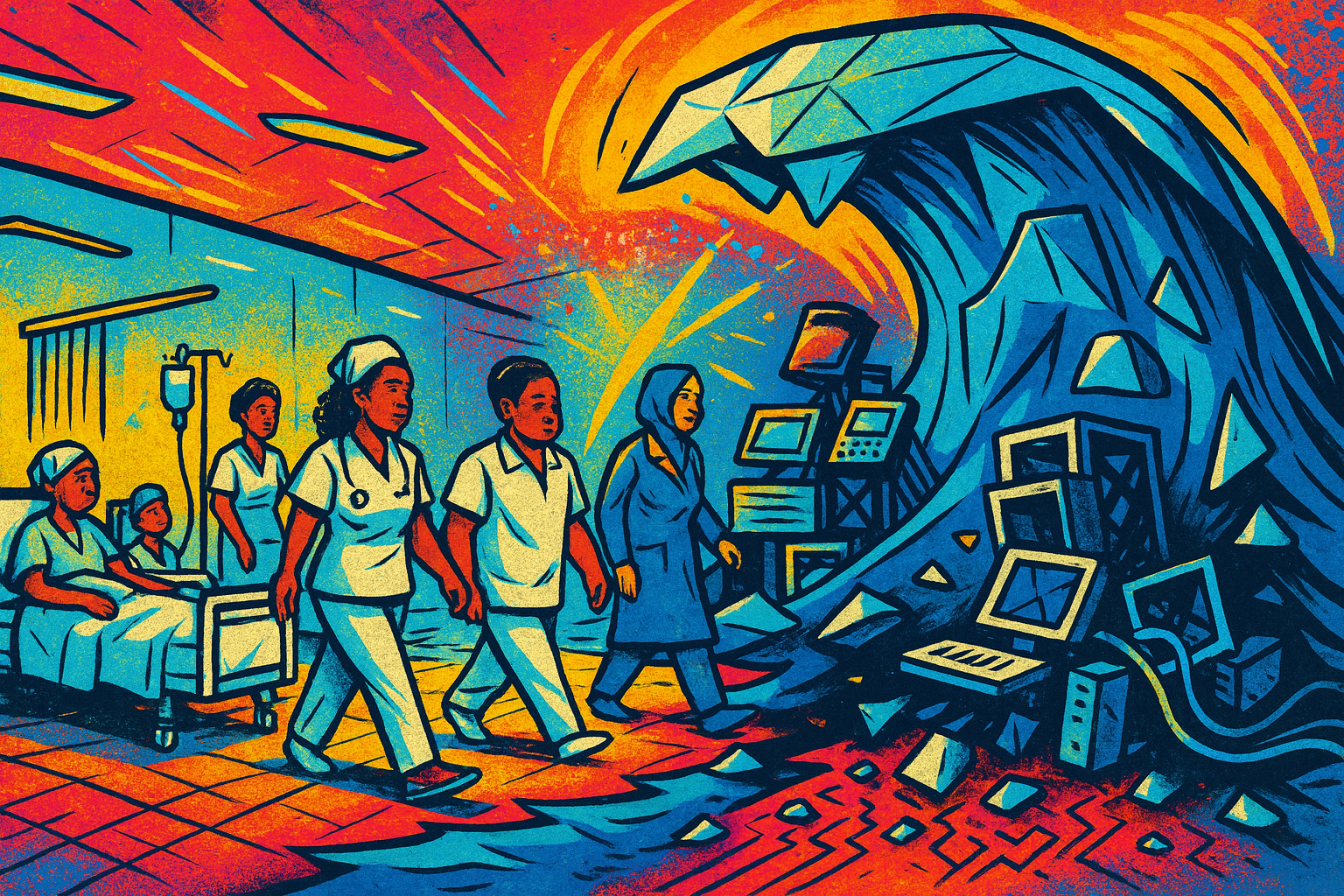
When I talk to healthcare professionals about technology in the NHS and social care, the conversation is often pulled from one extreme to the other. Start talking about the basics such as legacy infrastructure, ageing devices, patchy Wi-Fi, shared computers and some people want to move straight to AI, automation and the future. Start with AI, and the conversation quickly shifts back to foundations. The yo-yo-ing can be dizzying and the inability to handle a tsunami of tech worrying.
That tension is real. Staff are interested in both, and many are not convinced that either will be delivered well. The reality is that we cannot choose between the two. We need both.
We need infrastructure that is fit for purpose, and we need to harness new technologies to deliver care that meets the expectations of staff, patients, carers and the public. The real challenge is how to do both at once.
Tech as estates
Too often, attention is captured by “shiny” new technology like AI pilots, digital twins and predictive analytics. Disregarding the systems beneath them creaking under the strain. Staff are left trying to keep services running and stitch together the foundations as they go. Without strong foundations, innovation cannot take root.
Part of the problem is how technology is funded and understood. Tech is frequently treated as a one-off purchase. In practice, it is more like a building: it needs maintenance, renewal and periodic upgrading. Historically, the lack of a consistent maintenance budget has allowed the burden of legacy technology to grow. At the same time, funding often prioritises new tools, so the NHS ends up layering modern technology on top of rapidly ageing systems.
This is compounded by a basic gap: we do not routinely track the data that would tell us whether the foundations are “good enough”. How old are devices? How many are shared? How long do they take to boot up? How often do they crash? How fast and reliable is Wi-Fi? These measures should be visible, monitored and held to a minimum standard—because they shape what staff and patients experience every day.
Avoiding an innovation shock
But staying up to date with the basics is not enough on its own. As new technologies emerge, the infrastructure that supports them has to evolve too. Even if we modernised every system today, a step change in technology tomorrow could still make parts of that infrastructure outdated.
So what would a more credible approach look like? We need three things.
First, a continuous cycle of renewal, driven by IT performance data and underpinned by a dedicated maintenance funding stream. If we do not fund upkeep, we should not be surprised when systems degrade.
Second, better use of pilots and horizon scanning as a way to plan for what future infrastructure will need to do if cutting-edge technologies are to be used safely and effectively. This could range from performance of infrastructure through to redefining what the infrastructure needs to be.
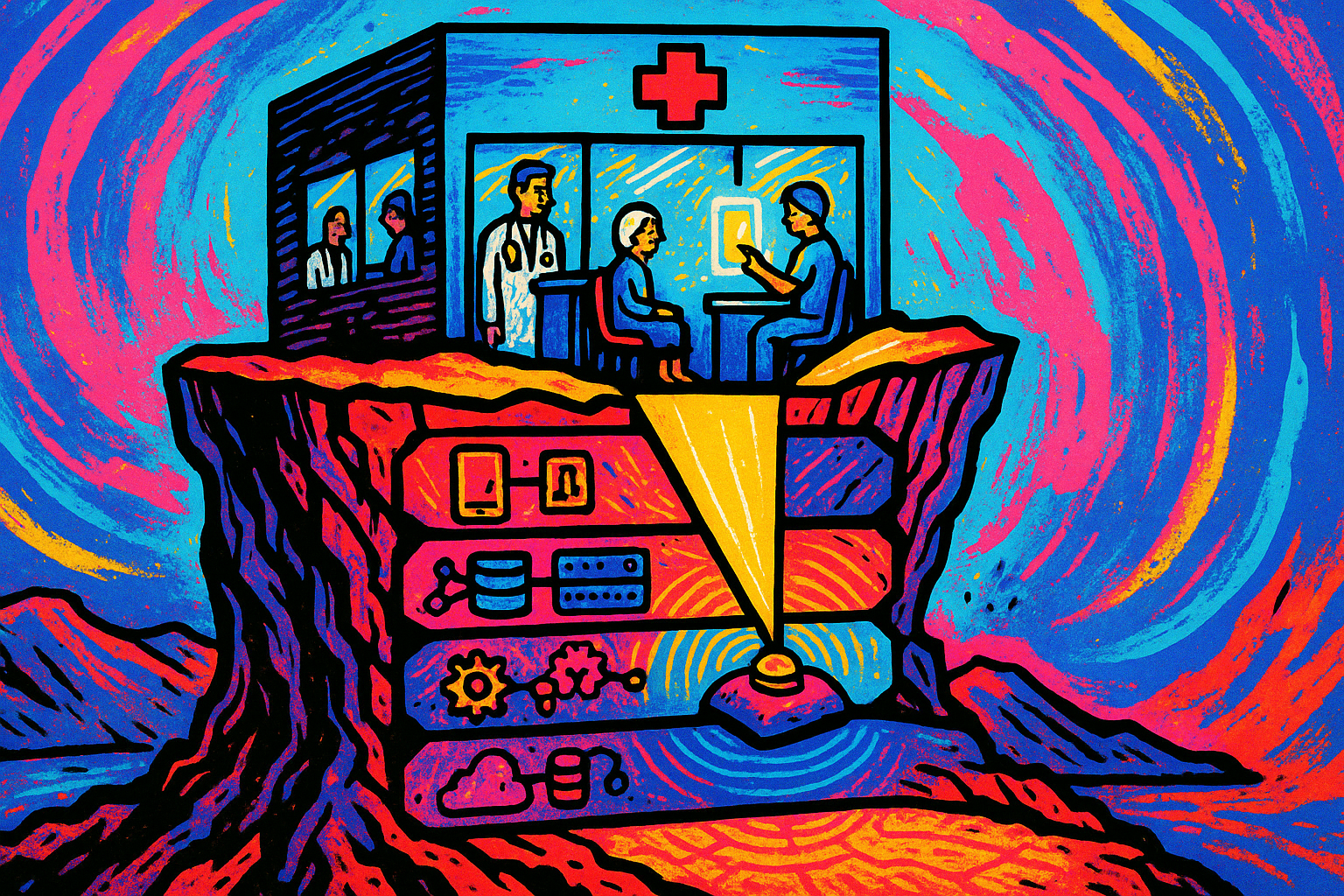
Third, a different approach to transformation: one that includes a minimum viable technology stack. Instead of paying only for the new tool at the top, transformation funding should also modernise the foundations in the same clinical or operational area. Think of it as a narrow wedge—from the point of use down through applications, integration, data and infrastructure—that can be strengthened and then iteratively broadened. This minimum viable technology stack should be informed by the pilots as mentioned above.
It takes time to upgrade and update the foundations by which point the cutting edge technology has moved on. The expectation of staff and the public is for the basics to work and patients to be able to benefit from cutting edge technology. To move forward, we need that minimum viable technology stack approach to transformation. Alongside this, we need to move decisively away from one-off investment towards ongoing maintenance and improvement, informed by data. Without these two changes, we will remain stuck in a tug of war—pulled between the future we want and the foundations we keep trying to hold together.
I hope you enjoyed this post, if so please share with others and subscribe to receive posts directly via email.
Get in touch via Bluesky or LinkedIn.
Transparency on AI use: GenAI tools have been used to help draft and edit this publication and create the images. But all content, including validation, has been by the author.